SriLanka.com
  • HOME
  • ABOUT SRI LANKA
    • Country overview
    • Quick facts
    • Geography
    • Climate
    • Population
    • Culture
    • Languages
    • Currency
  • TRAVEL & TOURISM
    • Why Visit Sri Lanka?
    • Beaches & Coastal Escapes
    • Wildlife & Safaris
    • Scenic Train Journeys
    • Ancient Cities & Heritage
    • Hill Country & Tea
    • National Parks
    • Adventure & Nature
    • Travel Information
  • TEA COUNTRY
    • The History of Ceylon Tea
    • Tea Growing Regions
    • Ceylon Tea Grades
    • Tea Estate Bungalows
    • Tea Factory Tours
    • Tea Trails
  • BUSINESS & TRADE
    • Why Sri Lanka
    • Key Industries
    • Export Resources
    • Investment Opportunities
  • RESOURCES
    • Travel Resources
    • Business Resources
  • ABOUT US
  • Contact
  • More
    • HOME
    • ABOUT SRI LANKA
      • Country overview
      • Quick facts
      • Geography
      • Climate
      • Population
      • Culture
      • Languages
      • Currency
    • TRAVEL & TOURISM
      • Why Visit Sri Lanka?
      • Beaches & Coastal Escapes
      • Wildlife & Safaris
      • Scenic Train Journeys
      • Ancient Cities & Heritage
      • Hill Country & Tea
      • National Parks
      • Adventure & Nature
      • Travel Information
    • TEA COUNTRY
      • The History of Ceylon Tea
      • Tea Growing Regions
      • Ceylon Tea Grades
      • Tea Estate Bungalows
      • Tea Factory Tours
      • Tea Trails
    • BUSINESS & TRADE
      • Why Sri Lanka
      • Key Industries
      • Export Resources
      • Investment Opportunities
    • RESOURCES
      • Travel Resources
      • Business Resources
    • ABOUT US
    • Contact
SriLanka.com
  • HOME
  • ABOUT SRI LANKA
    • Country overview
    • Quick facts
    • Geography
    • Climate
    • Population
    • Culture
    • Languages
    • Currency
  • TRAVEL & TOURISM
    • Why Visit Sri Lanka?
    • Beaches & Coastal Escapes
    • Wildlife & Safaris
    • Scenic Train Journeys
    • Ancient Cities & Heritage
    • Hill Country & Tea
    • National Parks
    • Adventure & Nature
    • Travel Information
  • TEA COUNTRY
    • The History of Ceylon Tea
    • Tea Growing Regions
    • Ceylon Tea Grades
    • Tea Estate Bungalows
    • Tea Factory Tours
    • Tea Trails
  • BUSINESS & TRADE
    • Why Sri Lanka
    • Key Industries
    • Export Resources
    • Investment Opportunities
  • RESOURCES
    • Travel Resources
    • Business Resources
  • ABOUT US
  • Contact

THE HISTORY OF CEYLON TEA

From Coffee to Ceylon Tea

Today, Sri Lanka is internationally recognised as the home of Ceylon Tea, one of the world's most celebrated teas. However, tea was not always the island's most important crop.

During the early 19th century, coffee dominated Sri Lanka's plantation economy. Vast areas of the central highlands were planted with coffee, and the industry flourished under British colonial rule. However, in the late 1860s, a devastating fungal disease known as Coffee Leaf Rust destroyed much of the coffee crop, forcing plantation owners to seek an alternative.

This challenge would ultimately lead to the birth of one of Sri Lanka's greatest industries.

Get in Touch

Quality First

We deliver exceptional results in everything we do, ensuring your satisfaction at every step.

Expert Care

Our experienced team brings skill and passion to every project, no matter the size.

Real Results

Proven outcomes that speak for themselves and make a meaningful difference for your business.

James Taylor and the Birth of Ceylon Tea

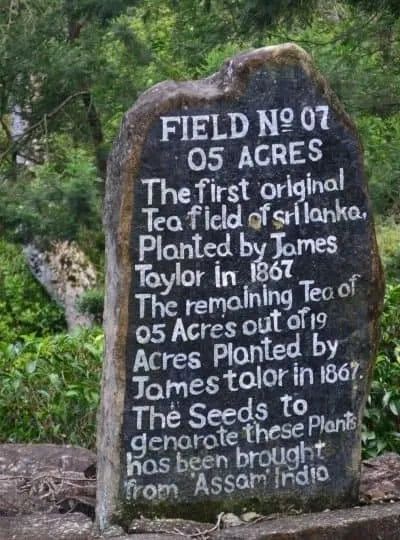
In 1867, a young Scottish planter named James Taylor planted the first commercial tea estate at Loolecondera Estate near Kandy. Working with only a small area of land, Taylor carefully developed tea cultivation and manufacturing techniques suited to Sri Lanka's climate and geography.

His early success demonstrated that tea could thrive in the island's highlands, paving the way for the rapid expansion of the industry.

Today, James Taylor is widely regarded as the Father of Ceylon Tea.


.

Growth of a Global Industry

Following Taylor's success, tea cultivation expanded rapidly throughout Sri Lanka's central highlands. Estates were established in regions such as Kandy, Nuwara Eliya, Dimbula, Uva, Ruhuna, and Sabaragamuwa, each producing teas with distinctive characteristics.

By the late 19th century, Ceylon Tea had gained an international reputation for quality, flavour, and consistency. Exports grew steadily, helping to establish Sri Lanka as one of the world's leading tea-producing nations.


Ceylon Tea Today

More than 150 years later, tea remains one of Sri Lanka's most important industries and a symbol of the country's heritage and identity.

Ceylon Tea is enjoyed in over 140 countries and is renowned for its bright liquor, distinctive flavour, and exceptional quality. The industry supports hundreds of thousands of livelihoods while continuing to play an important role in Sri Lanka's economy and culture.

Today, visitors can explore tea plantations, historic factories, museums, and estate bungalows throughout the island's famous tea-growing regions.


  • HOME
  • Privacy Policy
  • Contact

Sri Lanka.com

Copyright © 2026 Sri Lanka.com - All Rights Reserved.

This website uses cookies.

We use cookies to analyze website traffic and optimize your website experience. By accepting our use of cookies, your data will be aggregated with all other user data.

DeclineAccept